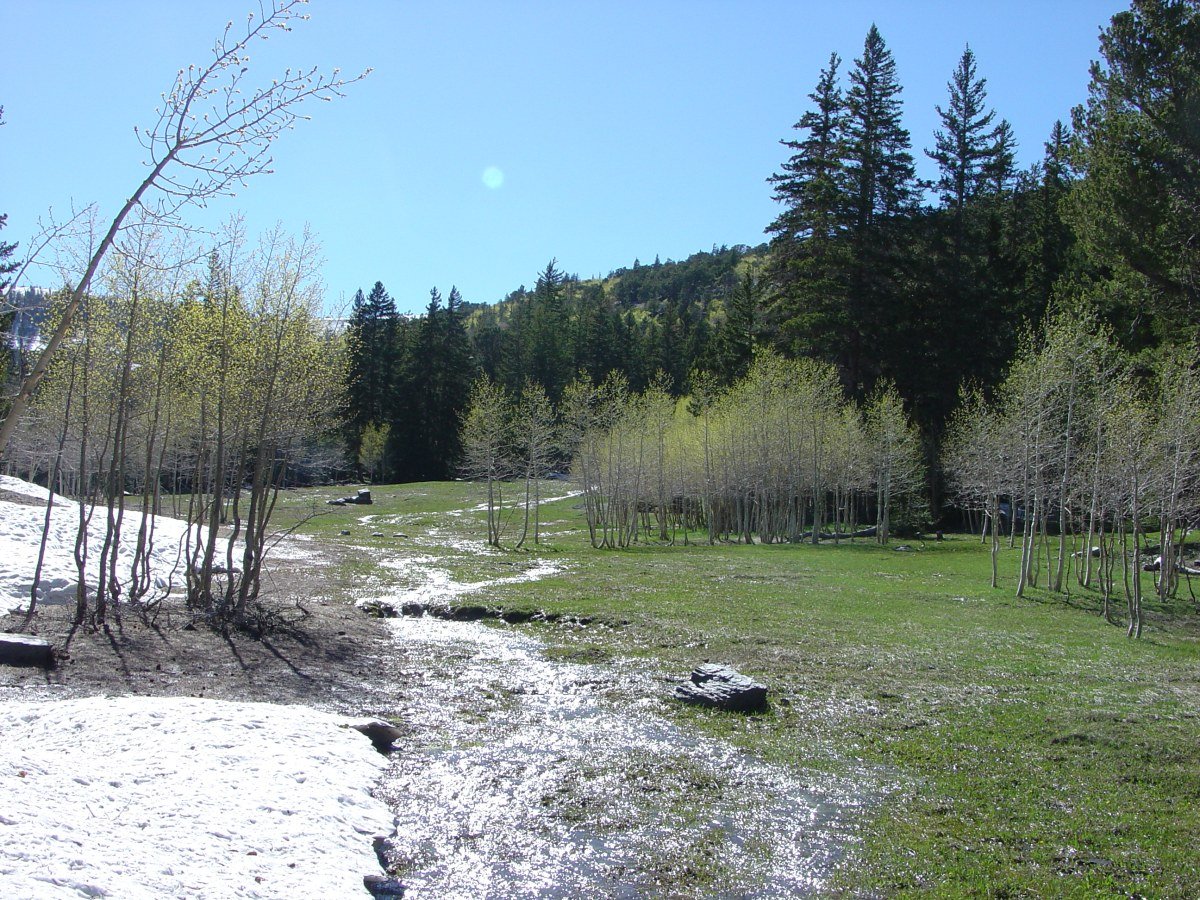
From snow to river
Snowmelt is the change of solid snow into liquid water. In colder climates, melting snow and ice supply much of the spring runoff and river streamflow. This guide addresses that general mechanism rather than a current event. [s1]
The first step is to treat the snowpack as temporary storage. In some areas, including the western United States and Canada, mountain snowfields and glaciers function as natural reservoirs. They retain cool-season precipitation and release some or all of it during the warm season. [s1]
The word “reservoir” is a conceptual simplification here: it separates the time of accumulation from the time of release. It does not mean every basin behaves identically; it describes the seasonal storage role attributed to snow and ice in the specified areas. [s1]
A procedure for reading a hydrograph
Begin with the variable being plotted. The USGS example for the North Fork American River at North Fork Dam in California shows daily mean streamflow over four years. Before interpreting a peak, remember that each plotted value summarizes a full day. [s1]
The second step is to compare both season and year. The large peaks in the hydrograph are mainly produced by snowmelt, but storms can also add runoff. Snowmelt runoff also changes from one season to another and from one year to another. [s1]
The California comparison shows why both time scales matter: streamflow peaks were high in 2000, while the 2001 peak was much smaller. A major drought in the area in 2001 reduced winter snowfall, and the resulting shortage of water stored in the snowpack affected availability for the remainder of the year. [s1]
Hypothetical comparison and limits
Hypothetical example: a chart contains a spring streamflow maximum. The sound result is “consistent with a snowmelt contribution,” not “caused only by snowmelt.” Peak shape alone does not exclude runoff from a storm, and the response may differ by season and year. [s1]
The practical sequence is therefore to identify the daily mean, place the peak within the season, compare it with other years and check whether storm information is available. The result remains limited: without additional evidence, all runoff cannot be assigned to one cause. [s1]
Finally, high streamflow should not be read in isolation as a diagnosis of one specific hazard. Rapid snowmelt can trigger landslides and debris flows. In alpine regions such as Switzerland, snowmelt combined with particular conditions, including excessive rainfall on melting snow, may become a major cause of floods. [s1]
Sources consulted
- USGS — neve, fusione e portata dei fiumi — Source: U.S. Geological Survey / Water Science School
Content generated automatically from the cited sources.
All news and guides